
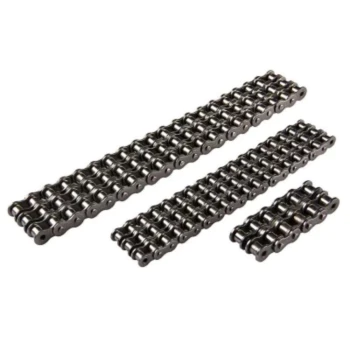
 Operating within the highly demanding sector of automotive transmission manufacturing, engineers continually seek robust material handling solutions that ensure absolute synchronization and positional accuracy. The camelback chain emerges as the preeminent choice for high-precision gearbox assembly lines, specifically designed to address the unique load distribution and indexing requirements of complex transmission systems. In the heart of the United Kingdom’s automotive manufacturing hubs, from the modern electric vehicle plants in the Midlands to specialized high-performance gear facilities across Britain, the reliance on advanced conveyance technology has never been more critical. A well-engineered camelback chain provides a highly specialized geometric profile that perfectly cradles heavy, irregularly shaped gearbox casings, mitigating the micro-vibrations and unpredictable positional shifts that frequently plague standard flat-top or conventional roller chains. By utilizing a precision-machined camelback chain, factory operators can seamlessly integrate heavy-duty transport mechanics with highly sensitive robotic precision assembly stations. This integration ensures that every individual gear, synchronizer ring, bearing, and delicate fluid seal is inserted with absolute sub-millimeter accuracy. The raised profile design of the camelback chain significantly reduces localized point-loading stress, thereby distributing the immense weight of cast-iron or aluminum gearbox housings evenly across the track. This structural advantage not only extends the operational lifespan of the entire conveyor infrastructure but also maintains the rigorous cleanliness, acoustic comfort, and operational efficiency standards demanded by modern British industrial engineering protocols.
Fundamental Engineering Principles and Advanced Metallurgy
Delving deeper into the mechanical architecture, the camelback chain operates on a sophisticated principle of dynamic load balancing and kinetic energy dissipation, which is absolutely vital for the delicate nature of gearbox precision assembly. Standard conveyor mechanisms often subject heavy payload pallets to lateral sway and longitudinal jerking during start-stop indexing cycles. The bespoke curvature of the camelback chain engages directly with custom-molded transport pallets, creating a mechanical interlock that physically prevents any unwanted deviation during rapid acceleration or deceleration phases. This is particularly crucial in UK-based manufacturing facilities where automated guided vehicles (AGVs) interface directly with the primary camelback chain conveyor network. From a metallurgical standpoint, our premium camelback chain components are forged from high-grade 40Cr alloy steel, subjected to rigorous multi-stage heat treatment processes including carbonitriding and precision quenching. This specific metallurgical conditioning creates a camelback chain with an incredibly hard, wear-resistant outer shell while retaining a tough, ductile core capable of absorbing extreme mechanical shock without catastrophic fracturing. The environmental conditions within heavy industrial environments, including exposure to synthetic machining lubricants, hydraulic fluids, and ambient humidity fluctuations typical in British industrial zones, demand extraordinary corrosion resistance. Consequently, the surface of each link within our camelback chain undergoes advanced shot peening and specialized anti-corrosive plating, ensuring decades of uninterrupted, high-efficiency operation without the risk of structural degradation or surface pitting.
| Technical Parameter | Standard Value | High-Precision Variance |
|---|---|---|
| Pitch Distance (mm) | 50.8 – 152.4 | ± 0.05 per linear meter |
| Ultimate Tensile Strength | > 120 kN | Tested to 150 kN peak |
| Core Material Grade | 40Cr Alloy Steel | Custom aerospace grades available |
| Surface Hardness | 45 – 50 HRC | Induction hardened pins up to 60 HRC |
| Max Operating Speed | 1.5 meters / second | Continuous highly stable flow |
Strategic Operational Advantages in Manufacturing Ecosystems
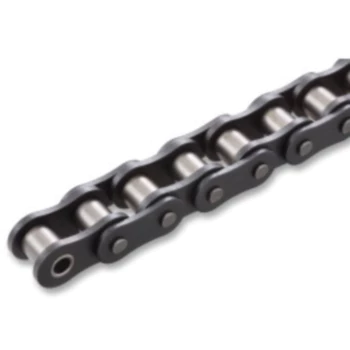 Implementing a purposefully designed camelback chain within a gearbox assembly facility introduces a multitude of cascading operational advantages that directly impact the overall equipment effectiveness and the facility’s bottom line. One of the most prominent benefits of the camelback chain architecture is the dramatic reduction in acoustic pollution and mechanical vibration across the factory floor. Traditional heavy-duty chains inherently generate significant metal-on-metal clattering during articulation; however, the engineered contour of the camelback chain allows for smoother engagement with drive sprockets, substantially dampening vibrational energy. This is a highly critical factor when assembling intricate EV transmissions where microscopic sensor alignments can be disrupted by ambient factory floor tremors. Furthermore, the specialized geometry of the camelback chain acts as a self-clearing mechanism. In environments where minute metal shavings or stray lubrication droplets might accumulate, the curved profile naturally channels these potential contaminants away from the critical bearing surfaces and pin joints. This unique self-cleaning attribute of the camelback chain extends the maintenance intervals far beyond industry norms, drastically reducing catastrophic unplanned downtime. For UK plant managers overseeing continuous 24/7 production cycles, replacing an entire conveyor line represents massive financial loss; the modular nature of our camelback chain allows for rapid, localized link replacement without requiring total system deconstruction, ensuring that the critical gearbox assembly line remains operational and highly productive.
Specific Application Scenarios within Gearbox Assembly Architectures
Mapping the trajectory of a raw cast housing to a fully functional, highly calibrated transmission unit reveals the indispensable nature of the camelback chain at every critical juncture. During the initial staging phase, the raw gearbox casings are exceptionally heavy and feature uneven weight distribution. The robust load-bearing capacity of the camelback chain ensures these casings traverse from the CNC machining centers to the primary assembly vestibules without dangerous tilting or shifting. Transitioning into the highly critical internal component population phase, precision robotic arms must insert fragile gear clusters, synchronized mesh rings, and incredibly tight-tolerance planetary gearsets. Here, the camelback chain excels by providing an absolutely rigid, zero-backlash platform. When the camelback chain indexes into a locked position, it guarantees that the gearbox housing is precisely aligned within micrometers of the robotic end-effector’s programmed coordinates, completely eradicating insertion collisions that would otherwise destroy expensive transmission internals. Progressing towards the fluid sealing and automated bolt-torquing stations, the assembly line demands absolute stability to ensure gaskets are seated perfectly and anaerobic sealants cure without micro-disturbances. The smooth articulation of the camelback chain ensures uninterrupted fluid application. During the final end-of-line acoustic and dynamometer testing stations, the assembled gearboxes must be rapidly connected to test rigs; the accurate pitch tolerance of our camelback chain allows automated splines to seamlessly engage with the transmission input shafts, streamlining the quality assurance process before the units are shipped to automotive assembly plants across the United Kingdom.
UK Customer Success Story: Transforming Transmission Production
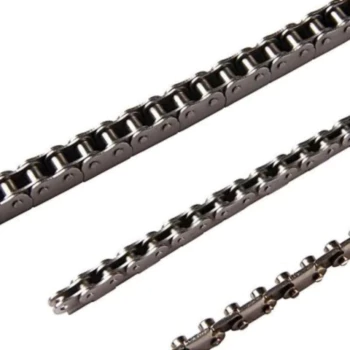 Located in the historic industrial heartland of Birmingham, Midlands Automotive Transmissions Ltd. (MAT) faced a critical engineering bottleneck while upgrading their production lines for next-generation dual-clutch transmissions. Their legacy flat-top conveyor system was generating unacceptable levels of microscopic chassis flutter during the heavy-load indexing phases, directly resulting in a 4.5% rejection rate due to misaligned input shaft seals. Recognizing the urgent need for absolute positional integrity, MAT engineering directors collaborated with our technical design team to implement a completely customized camelback chain solution. By replacing their existing infrastructure with our specialized camelback chain, explicitly engineered to match the heavy bottom-contour of their dual-clutch housings, MAT experienced an immediate stabilization of the entire assembly corridor. The inherent anti-sway properties of the camelback chain eliminated the micro-vibrations at the robotic insertion stations. Within three months of integrating the bespoke camelback chain, MAT recorded a staggering throughput increase of 22%, while simultaneously reducing their seal-alignment defect rate to a mathematically negligible 0.03%. This successful deployment highlights how critical precision material handling is to modern British manufacturing competitiveness.
“The transition to the customized camelback chain completely revolutionized our robotic insertion accuracy. We no longer battle with pallet drift; the index positional repeatability is absolutely phenomenal, saving us hundreds of hours in recalibration.”
— John Davies, Senior Plant Manager, Birmingham
“From a maintenance perspective, the wear resistance on this specific camelback chain is remarkable. Despite the heavy synthetic lubricants present in our facility, the chain integrity remains flawless after millions of cycles.”
— Sarah Jenkins, Lead Reliability Engineer, Manchester
“Partnering with Ever Power for our new camelback chain infrastructure provided us with unparalleled custom engineering support. Their ability to deliver a technically superior product tailored to British automotive standards was impressive.”
— David Ross, Procurement Director, London
Unmatched Manufacturing Prowess and Customization by Ever Power
At the core of our global operation lies the state-of-the-art Ever Power manufacturing complex, deeply committed to engineering the most resilient camelback chain systems available on the international market. We possess an exceptionally profound understanding that no two gearbox assembly lines operate identically; therefore, we offer comprehensive, end-to-end custom engineering services tailored specifically for our partners in the United Kingdom. Our factory floors are equipped with the latest multi-axis CNC machining centers, fully automated robotic welding bays, and an advanced metallurgical testing laboratory capable of simulating the most brutal industrial environments. When a UK client requests a specialized camelback chain, our dedicated engineering task force analyzes the exact torque specifications, dimensional payload constraints, and precise operational velocities of their facility. We can modify the pitch, enhance the structural alloy composition, alter the geometry of the camelback chain contour, and apply proprietary low-friction surface coatings tailored to specific synthetic oils used in British automotive plants. Our rigorous quality assurance protocols ensure every single link of the camelback chain undergoes ultrasonic flaw detection and dynamic tensile load testing before receiving certification for export. By choosing Ever Power, you are not merely purchasing a standard conveyor component; you are investing in a heavily customized, technically superior camelback chain infrastructure designed to future-proof your precision assembly operations against the escalating demands of the modern automotive sector.