
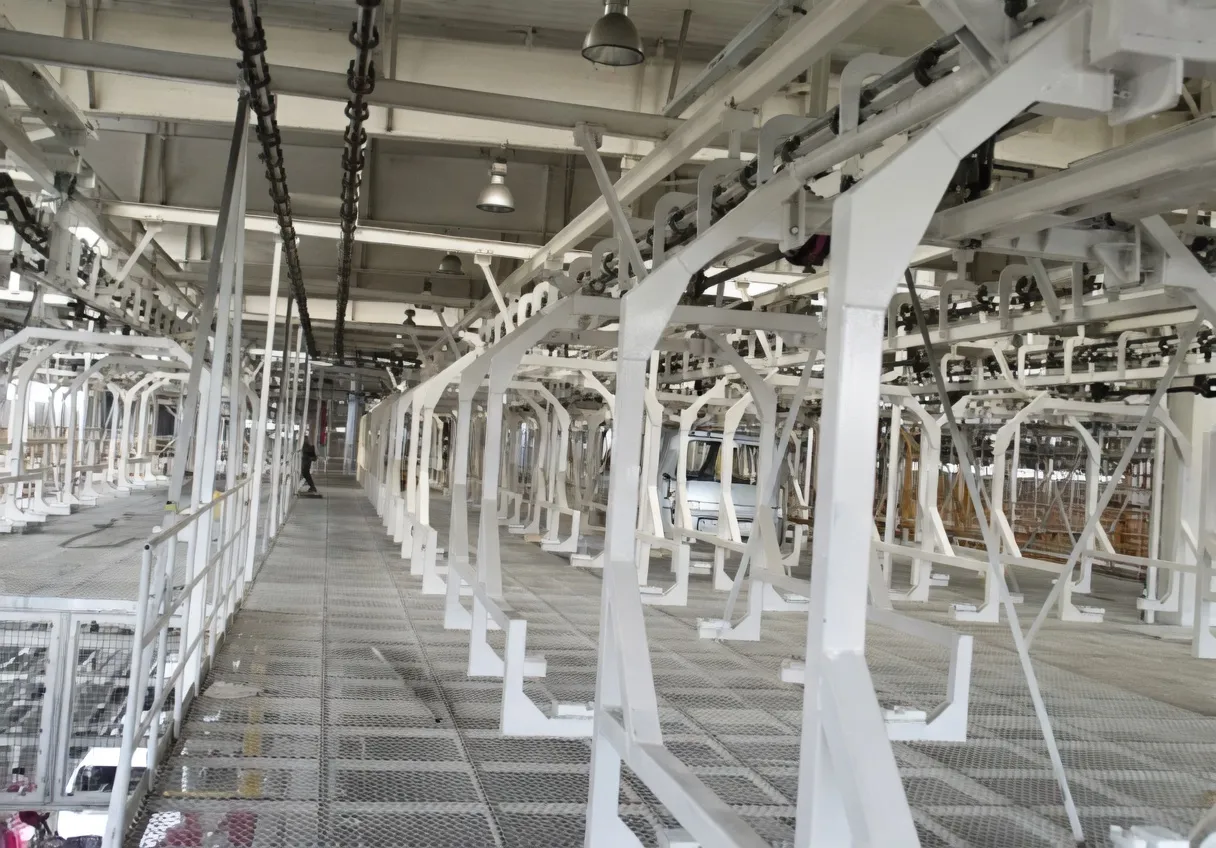
 Modern automotive manufacturing represents the absolute pinnacle of industrial engineering, demanding unprecedented precision, seamless integration, and relentless reliability across every single stage of the production lifecycle. Within this highly complex and unforgiving ecosystem, the car door assembly conveyor system stands out as a critically important operational subsystem that directly and profoundly impacts both the structural integrity and the flawless aesthetic finish of the final vehicle. The physical handling and transportation of car doors require an extraordinarily delicate balance; the mechanical system must reliably support substantial asymmetrical weight while simultaneously preventing any microscopic abrasions, localized pressure marks, or structural distortions to the freshly painted exterior surfaces and fragile internal electronic components. This intricate engineering requirement has continuously driven facility designers to seek advanced material handling solutions that go significantly beyond the capabilities of traditional roller, belt, or standard overhead continuous mechanisms.
Engineering Principles and Advanced Material Science
The fundamental operational superiority of the modern conveyor architecture lies entirely within its metallurgical composition and its highly specialized geometric configuration. The core structural integrity of the camelback chain is derived from the utilization of premium-grade, heavily alloyed carbon steels that undergo rigorous, multi-stage heat treatment processes to achieve an optimal balance between ultimate tensile strength and necessary operational flexibility. The specific link plates are precision-stamped and subjected to advanced carbonitriding treatments, creating an exceptionally hard, wear-resistant outer shell while maintaining a ductile, shock-absorbing inner core that prevents catastrophic brittle failure under sudden dynamic loading. This specific material engineering approach is absolutely critical for car door assembly lines, where the system is subjected to continuous start-stop cycles, varying asymmetrical loads, and potentially corrosive environmental factors common in nearby paint or chemical treatment zones. The intricate pin and bush combinations are manufactured with incredibly tight dimensional tolerances, drastically reducing the initial run-in elongation and ensuring that the absolute pitch accuracy remains consistent over millions of operational cycles, which is a fundamental prerequisite for synchronized robotic interactions.
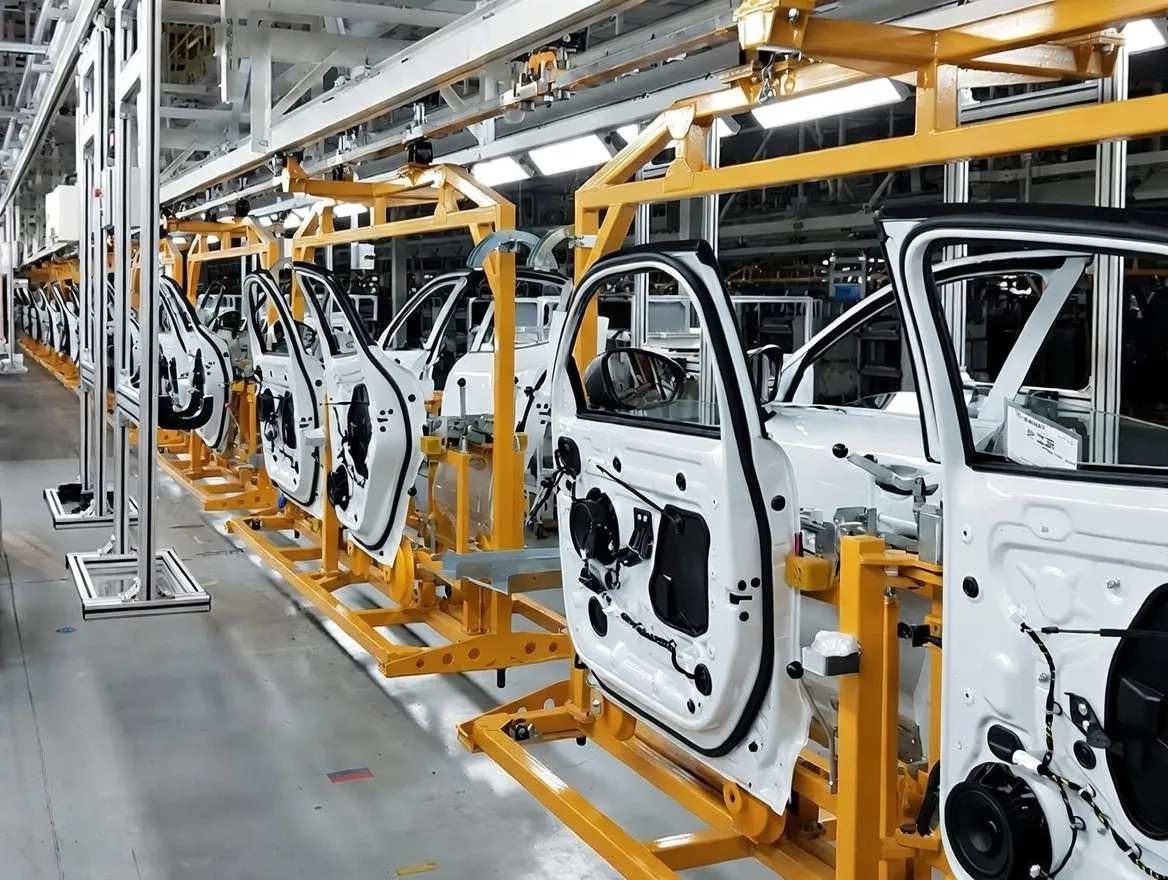
The defining characteristic of this mechanism, the unique undulating profile that gives the camelback chain its descriptive name, is engineered specifically to provide multi-point physical contact with the payload without requiring complex external clamping mechanisms. The elevated sections of the links act as localized support nodes that interface directly with custom-molded polyurethane or high-density polyethylene protective saddles, creating a secure, non-marring cradle for the highly sensitive lower edges of the car door panels. This specific geometric design naturally guides the payload into the perfect dead-center position through gravitational settling, completely eliminating the lateral sway and rotational instability that frequently plague flat-top or standard roller configurations. Engineers calculate the exact curvature and spacing of these elevated profiles based on the specific moments of inertia and the precise center of gravity of the target automotive components, ensuring that even under maximum conveyor acceleration or deceleration, the doors remain absolutely stationary relative to their transport fixtures. This profound level of passive positional control dramatically reduces the programming complexity required for the external robotic arms that interact with the moving assembly line.
Lubrication retention and environmental protection form another crucial aspect of the material science behind these advanced industrial conveying systems. Modern iterations of the camelback chain often incorporate specialized sintered alloy bushes that are deeply impregnated with high-performance synthetic lubricants during the manufacturing process, effectively creating a self-lubricating system that drastically reduces the need for constant maintenance interventions. In automotive environments where stray oil droplets could catastrophically contaminate the paint application processes, this ability to operate flawlessly with minimal external lubrication represents a massive operational advantage. Furthermore, the external surfaces of the components can be treated with advanced anti-corrosive coatings, such as specialized zinc-nickel plating or proprietary polymer seals, which provide extraordinary resistance to the aggressive cleaning chemicals and high-humidity environments frequently encountered in state-of-the-art British automotive production facilities. The meticulous attention paid to every single microscopic detail of the material composition ensures a vastly extended operational lifespan, translating directly into a significantly lower total cost of ownership for the manufacturing plant.
Technical Performance and Specification Parameters
| Parameter Designation | Standard Value Range | Engineering Metric Focus |
|---|---|---|
| Ultimate Tensile Strength | 45 kN to 180 kN | Ensures continuous heavy-duty load bearing capacity |
| Pitch Tolerance Accuracy | Plus/Minus 0.05 mm per meter | Crucial for synchronized robotic interaction |
| Operational Temperature Range | -20 Degrees Celsius to 250 Degrees Celsius | Accommodates paint drying ovens and staging areas |
| Surface Hardness (Pins/Bushes) | 55 HRC to 62 HRC | Maximizes wear resistance against abrasive particles |
| Maximum Operating Speed | Up to 45 meters per minute | Optimizes high-volume continuous flow production |
Core Operational Advantages in Automotive Environments
The deployment of this specialized infrastructure yields massive operational dividends that directly impact the bottom line of modern automotive manufacturers. The absolute paramount advantage lies in the unparalleled dimensional stability provided by the camelback chain during the high-speed transit of exceedingly fragile door sub-assemblies. Standard flat or roller-based chains inherently allow for microscopic vibrations and lateral shifting as the links articulate over the driving sprockets, a phenomenon that causes catastrophic misalignment when doors arrive at automated welding or sealing stations. The elevated profile of this specialized mechanism effectively dampens these destructive harmonic vibrations by creating a highly secure, mechanical interlock with the transport fixtures, effectively isolating the payload from the mechanical noise of the drive system. This profound level of stability ensures that robotic arms equipped with highly sensitive vision systems can rapidly and flawlessly locate the exact geometric coordinates of the door hinges and latch mechanisms, drastically reducing the cycle time required for positional scanning and calculation at every single workstation.
Maintenance minimization represents another transformative benefit for high-volume production facilities where every single minute of unplanned downtime results in astronomical financial losses. Traditional conveying systems often demand intensive, highly scheduled lubrication regimes and frequent tensioning adjustments to counteract the natural elongation caused by constant heavy loading. The brilliantly engineered architecture of the camelback chain significantly mitigates these persistent issues by utilizing larger bearing areas within the pin and bush joints, which massively distributes the internal compressive forces and drastically reduces the localized friction that leads to component degradation. The robust nature of the heavy-duty side plates prevents the twisting and deformation that occurs when standard chains are subjected to unequal lateral forces during cornering maneuvers on the assembly line. Maintenance engineering teams across the United Kingdom consistently report that the intervals between mandatory visual inspections and physical component replacements are extended by multiples when utilizing this advanced configuration, allowing them to confidently redirect their valuable labor resources toward proactive plant improvements rather than reactive emergency repairs.
The acoustic profile of the production environment is profoundly improved through the implementation of these high-precision components. In modern automotive plants, reducing ambient industrial noise is a critical mandate for enhancing worker safety, improving communication on the factory floor, and complying with stringent occupational health regulations. The incredibly precise manufacturing tolerances and the smooth articulation of the precisely machined components completely eliminate the harsh metallic clanking and grinding noises typically associated with heavy industrial conveyors. The seamless integration of customized polymer damping pads over the undulating profile further isolates the metallic resonance, resulting in an astonishingly quiet operation even when transporting heavy, multi-layered car door assemblies at maximum production speeds. This significant reduction in acoustic pollution fundamentally transforms the atmosphere of the assembly line, creating a much more focused, highly professional environment that facilitates better quality control and drastically reduces operator fatigue during demanding, high-concentration production shifts.
Specific Application Scenarios: Car Door Assembly Integration
Within the highly segmented architecture of a modern automobile plant, the transportation of door assemblies requires specialized handling at multiple distinct stages, each presenting unique engineering challenges that the system must overcome. During the initial body-in-white phase, where raw, unpainted metal door frames are initially married to their hinges, the conveying system must absolutely withstand the intense heat, blinding light, and flying metallic spatter generated by automated spot-welding robots. The inherent robustness of the camelback chain ensures that the structural integrity of the conveying line remains completely uncompromised despite continuous exposure to this incredibly aggressive environment. The specialized undulating links provide the exact geometric clearance required for the welding electrodes to approach the door frames from underneath, an operational maneuver that is completely impossible with standard flat-bed conveyor architectures. This precise positioning capability allows automotive design engineers to implement much more complex, highly reinforced weld patterns on the lower sections of the car doors, significantly enhancing the side-impact safety ratings of the final manufactured vehicle.
As the manufactured doors progress into the highly sensitive paint shop environments, the operational requirements completely shift from raw mechanical robustness to absolute microscopic cleanliness and perfect smooth-motion control. The doors undergo intense multi-stage cleaning, electrophoretic coating, and high-temperature oven curing processes. The conveying mechanism must transport the components through these intense thermal and chemical zones without introducing a single microscopic particle of contamination onto the pristine surfaces. The advanced, self-lubricating properties of the specialized camelback chain absolutely shine in this critical application, as they entirely eliminate the risk of wet lubricant dripping onto the freshly applied e-coat. The seamless, incredibly smooth articulation of the precision-machined joints ensures that the doors glide through the curing ovens without suffering from any jerking or shuddering movements, which would otherwise cause the curing paint to ripple or pool unevenly, resulting in catastrophic aesthetic rejections that cost the facility thousands of pounds per incident.
The final trim and assembly line represents the most complex logistical phase, where fragile glass windows, intricate electronic wiring harnesses, heavy audio speakers, and luxurious interior trim panels are meticulously installed into the painted door shells. The conveying system must securely present the doors at ergonomically optimized angles for human operators while moving at a continuous, incredibly precise speed. The unique design of the camelback chain allows for the rapid integration of highly specialized, rotatable fixtures that securely grip the door panels, enabling factory technicians to easily pivot the heavy components to access tight internal cavities without suffering from severe ergonomic strain. Because the heavy weight of the fully assembled door is perfectly distributed across the elevated ridges of the chain, there is absolutely zero risk of the transport fixture unexpectedly shifting or collapsing during the delicate installation of fragile structural glass. This unparalleled level of stability and ergonomic flexibility fundamentally drives the incredible efficiency of modern British car manufacturing facilities, allowing them to rapidly produce incredibly complex luxury vehicles with near-zero defect rates.
Transformative Success in the UK West Midlands Automotive Corridor
A premier, globally recognized luxury automotive manufacturing facility located deep within the traditional industrial heartland of the UK West Midlands recently faced a highly critical production bottleneck that threatened their entire European delivery schedule. Their legacy overhead conveyor system, utilized for transporting heavily equipped SUV door assemblies, was experiencing rapid, unacceptable chain elongation and severe vibration issues due to the massively increased weight of the new generation of electric window motors and advanced acoustic insulation panels. This continuous mechanical degradation resulted in the robotic sealing arms frequently missing their precise target coordinates, causing highly expensive weather-stripping failures and unacceptable water ingress issues during high-pressure quality testing. The engineering directorate realized that a fundamental architectural change to their material handling philosophy was urgently required to salvage the production targets for their flagship electric vehicle platform.
Following an incredibly rigorous, multi-vendor technical evaluation, the facility decisively implemented a highly customized, ground-mounted camelback chain solution specifically engineered for ultra-heavy payload stability. The exact pitch and undulating profile were bespoke-designed to interface perfectly with their existing automated guided vehicle transfer stations. The immediate operational results following the rapid weekend installation were absolutely unprecedented in the plant’s history. The destructive harmonic vibrations were completely eradicated, instantly allowing the high-speed robotic sealing stations to operate at one hundred percent of their rated theoretical speed without a single positional error. The plant’s overall mechanical downtime attributed to conveyor jams plummeted by an astonishing ninety-two percent within the first quarter of operation. The drastically improved stability completely eliminated the microscopic paint scratches that were previously occurring during the dynamic transfer phases, saving the facility hundreds of thousands of pounds in rework costs and firmly establishing this advanced chain technology as the undisputed gold standard for all future assembly line upgrades across their global manufacturing network.
Industry Expert Endorsements
“The transition to this highly specialized conveying architecture has fundamentally revolutionized our door sub-assembly operations in our Sunderland plant. The incredible rigidity and positional accuracy provided by the camelback chain allowed us to massively accelerate our robotic welding sequences. We have observed absolutely zero measurable pitch elongation after eighteen months of continuous, brutal three-shift operations. It is an extraordinary piece of industrial engineering.”
— Director of Production Engineering, Major UK Automotive Manufacturer
“From a purely maintenance perspective, dealing with legacy overhead systems was an absolute nightmare of constant lubrication and emergency tensioning. Integrating the custom-engineered camelback chain into our final trim lines has completely eliminated those headache-inducing weekend repair schedules. The self-lubricating properties and the sheer robustness of the metallurgical design have dramatically reduced our total cost of ownership.”
— Lead Maintenance Systems Manager, Premium SUV Plant, Solihull
“Achieving the perfect, flawless paint finish requires absolute mechanical stability during the agonizingly slow oven curing process. Any minor shudder translates directly into aesthetic defects. The seamless, vibration-free motion profile delivered by the camelback chain mechanism is literally the secret weapon behind our industry-leading quality metrics. The specialized protective saddles perfectly cradle the delicate edges without leaving a single trace.”
— Head of Quality Assurance and Paint Operations, UK Midlands
Unmatched Factory Customization Capabilities by Ever Power
Recognizing that absolutely no two automotive production facilities operate with identical spatial constraints or engineering parameters, Ever Power has strategically positioned itself as the undisputed global leader in the bespoke design and rapid manufacturing of highly specialized power transmission components. Our massive, state-of-the-art production facilities are equipped with incredibly advanced CNC machining centers and automated metallurgical testing laboratories, granting our senior engineering teams the unprecedented ability to alter every single microscopic parameter of the camelback chain to perfectly match your exact operational requirements. Whether your UK-based facility requires a totally unique, non-standard pitch dimension to interface with legacy driving sprockets, or you necessitate the development of highly exotic, high-temperature alloy variants to survive incredibly aggressive chemical curing ovens, our factory possesses the profound technical expertise and the immense industrial capacity to deliver absolute perfection.
Our dedicated application engineers engage in deep, highly collaborative consultations with your plant layout designers, thoroughly analyzing your exact volumetric throughput targets, maximum payload weights, and specific environmental challenges. We utilize highly sophisticated 3D kinematic simulation software to virtually prototype the exact interaction between the customized camelback chain and your specific car door geometries, ensuring absolutely flawless performance before a single piece of steel is ever cut. This rigorous, highly scientific approach to customized manufacturing guarantees that the final delivered product will seamlessly integrate into your existing factory infrastructure with absolute zero modifications required on your end. Ever Power guarantees rapid prototyping, exceptionally short manufacturing lead times, and a totally unyielding commitment to achieving the absolute highest levels of quality control, ensuring your production lines remain continuously operational and massively profitable.