
Product Description
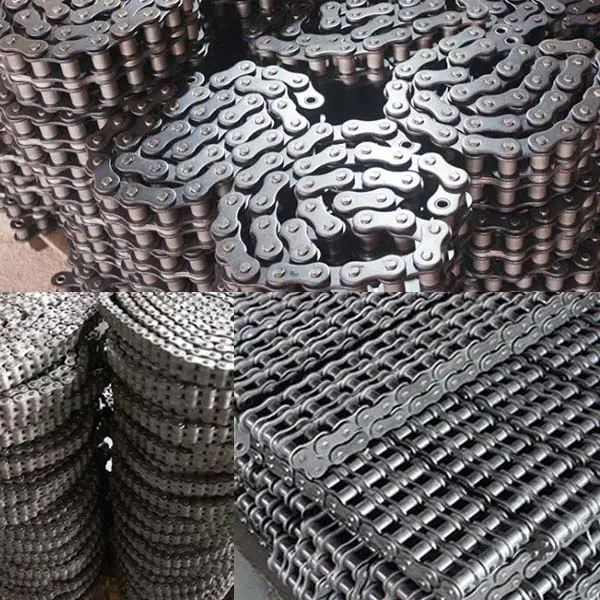
Product | Standard Double Pitch Roller chain | ||
Material | 40Mn steel,304 stainless steel, 316 stainless steel and 201 stainless steel. | ||
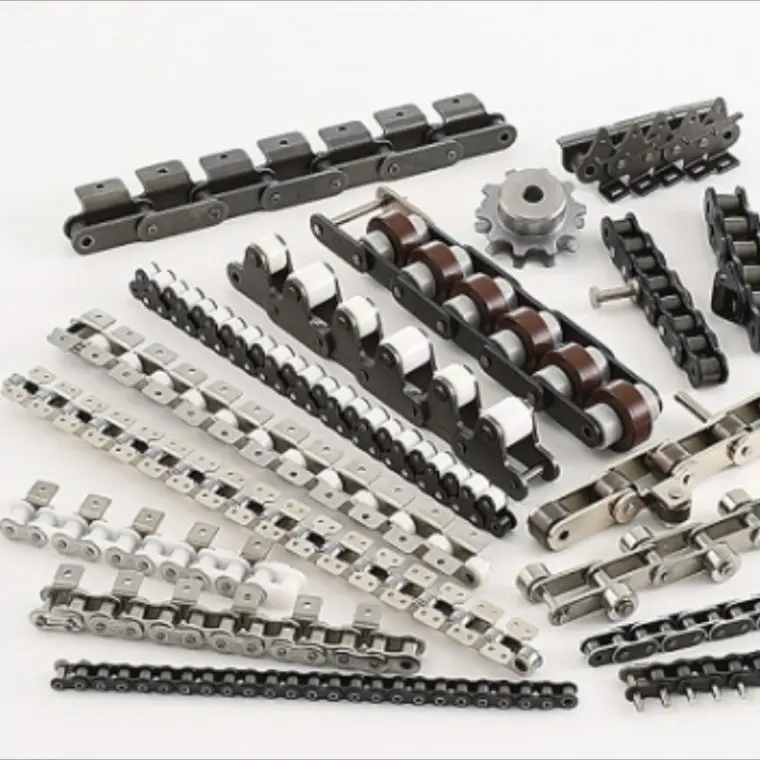
Types | Standard chains and special chains, such as A or B series chains, roller chains, driving chains, conveyor chains, hoisting chains, agricultural chains, sprockets, gears, wheels and so on. | ||
Series | A series(12.7-50.8mm pitches),B series (9.525-50.8mm pitches)and the heavy series. | ||
Short pitch precision roller chain | Simplex Roller Chains&Bushing Chains: 04C-1,06C-1,085-1,08A-1,10A-1,12A-1,16A-1,20A-1,24A-1,28A-1,32A-1,36A-1,40A-1,48A-1 04C-2,06C-2,085-2,08A-2,10A-2,12A-2,16A-2,20A-2,24A-2,28A-2,32A-2,36A-2,40A-2,48A-2 04C-3,06C-2,085-3,08A-3,10A-3,12A-3,16A-3,20A-3,24A-3,28A-3,32A-3,36A-3,40A-3,48A-3 | ||
Chain link type | Standard links (without attachment) and non-standard links (with attachment).
A1: One-side,one hole cranked attachments. | ||
Our Products Advantage | 1. Every step from production order to the packing process has a strict quality inspection. | ||
1.Fast delivery: Standard products can be delivered in as fast as 20 days
2.Good service: timely reply, prompt quotation, responsible for the product
3.High cost performance: can maintain price stability for a certain period of time, bringing greater profits to customers
4.Good quality: production and testing have corresponding supervision to ensure product quality and get high praise from customers
5.OEM service: products can be customized according to drawings and requirements
We are responsible for the ordered products. We are very confident in the products we produce. Of course, if you have any problems after receiving the goods, you can contact us directly. We will confirm and negotiate in time to solve your difficulties.
| Standard or Nonstandard: | Standard |
|---|---|
| Application: | Textile Machinery, Garment Machinery, Conveyer Equipment, Packaging Machinery, Electric Cars, Motorcycle, Food Machinery, Mining Equipment, Agricultural Machinery, Car |
| Surface Treatment: | Oil Blooming |
| Structure: | Roller Chain |
| Material: | Alloy |
| Type: | Short Pitch Chain |
| Samples: | US$ 35/kg 1 kg(Min.Order) | |
|---|
| Customization: | Available | Customized Request |
|---|
What are the maintenance intervals for roller chains?
Maintenance intervals for roller chains can vary depending on several factors, including the specific application, operating conditions, and manufacturer’s recommendations. Here’s a detailed answer to the question:
1. Lubrication: Proper lubrication is essential for the smooth operation and longevity of a roller chain. Lubrication intervals depend on the type of lubricant used, the chain’s speed, and the operating conditions. In general, it is recommended to lubricate the chain every 200-300 miles or as specified by the motorcycle manufacturer.
2. Tension Adjustment: Chain tension should be checked regularly and adjusted as needed to maintain optimal performance. Over time, roller chains can elongate due to wear, which affects their tension. It is recommended to check the chain tension every 500-1,000 miles or as advised by the motorcycle manufacturer.
3. Inspection: Regular visual inspection of the roller chain is important to identify any signs of wear, damage, or misalignment. Inspect the chain for loose or missing rollers, damaged links, excessive wear on sprockets, and any signs of rust or corrosion. Inspections should be performed at least every 500-1,000 miles or as recommended by the motorcycle manufacturer.
4. Cleaning: Periodic cleaning of the roller chain helps remove dirt, debris, and accumulated grime that can interfere with its performance. Cleaning intervals depend on the riding conditions and the level of contamination. Generally, it is advisable to clean the chain every 1,000-2,000 miles or when it appears visibly dirty.
5. Replacement: Roller chains have a finite lifespan and will eventually require replacement. The replacement interval depends on various factors, including the chain’s quality, usage conditions, and maintenance practices. As a general guideline, roller chains should be replaced when they become excessively worn, elongated beyond the manufacturer’s specifications, or show signs of damage that compromise their integrity.
It’s important to note that the maintenance intervals provided here are general guidelines, and it is crucial to refer to the motorcycle manufacturer’s specific recommendations for the roller chain used in your motorcycle. Adhering to the manufacturer’s guidelines and performing regular maintenance can help ensure the roller chain’s optimal performance, reliability, and longevity.
How do roller chains handle reverse motion?
Roller chains are capable of handling reverse motion in applications where the direction of movement needs to be reversed. Here’s a detailed answer to the question:
1. Bi-Directional Operation: Roller chains are designed to operate in both forward and reverse directions. The chain links and rollers are constructed to engage with the sprockets in either direction, allowing the chain to smoothly transfer power and motion.
2. Engagement with Sprockets: When the roller chain is in reverse motion, the rollers on the chain engage with the sprocket teeth in the opposite direction compared to forward motion. The engagement between the chain and the sprockets ensures a secure and reliable power transmission, allowing the chain to efficiently transfer motion in reverse.
3. Lubrication and Maintenance: Proper lubrication is essential for the smooth operation of roller chains, including during reverse motion. Adequate lubrication reduces friction and wear, ensuring the chain’s longevity and performance. Regular maintenance, including lubrication and inspection, helps identify any issues that may affect the chain’s ability to handle reverse motion and allows for timely corrective actions.
4. Proper Tensioning: Maintaining proper tension in the roller chain is crucial for its performance in both forward and reverse motion. Adequate tension ensures the chain remains engaged with the sprockets and prevents slippage or disengagement during reverse operation. Proper tensioning can be achieved through tensioning devices or adjustable mounting arrangements.
5. Load Capacity: Roller chains are designed to handle various loads, including reverse motion. However, it’s important to consider the specific application requirements and select a roller chain with the appropriate load capacity and strength to withstand the forces experienced during reverse operation.
6. Alignment and Installation: Proper alignment of the roller chain and the sprockets is essential for reliable performance in both forward and reverse motion. Ensuring correct installation, including proper alignment and tensioning, helps maintain the chain’s engagement with the sprockets and ensures smooth operation in reverse.
It’s worth noting that the specific application requirements, such as speed, load, environmental conditions, and the type of roller chain, should be considered when determining the suitability of roller chains for reverse motion. Consulting the manufacturer’s guidelines and recommendations is important to ensure proper selection, installation, and maintenance of roller chains in applications involving reverse operation.
What is a roller chain and how does it work?
A roller chain is a type of transmission chain that is commonly used in various mechanical systems to transmit power and motion between rotating shafts. It consists of a series of interconnected links, including inner plates, outer plates, rollers, and pins. Here’s a detailed answer to the question:
A roller chain operates based on the principle of contact and rolling motion. The basic components of a roller chain include:
- Inner Plates: These are flat metal plates with holes through which the pins pass.
- Outer Plates: These are similar to inner plates and are connected to the inner plates through pins.
- Rollers: The rollers are cylindrical components that are positioned between the inner and outer plates. They have a slightly larger diameter than the pins, allowing them to freely rotate.
- Pins: The pins hold the inner and outer plates together and provide a pivot point for the rollers. They pass through the holes in the inner and outer plates and secure them in place.
When the roller chain is installed in a system, it wraps around a pair of sprockets. The sprockets have teeth that mesh with the rollers of the chain. As one sprocket rotates, it engages with the rollers and pulls the chain along, causing the other sprocket to rotate as well.
The working principle of a roller chain involves the following steps:
- Engagement: The chain is positioned around the sprockets, and the rollers engage with the teeth of the sprockets.
- Tension: The tension in the chain is created by the movement of the sprockets, which causes the chain to wrap tightly around them.
- Rolling Motion: As the sprockets rotate, they impart a rolling motion to the rollers. The rollers, in turn, rotate freely on the pins, allowing the chain to move smoothly along the sprockets.
- Power Transmission: The rotational motion of one sprocket is transferred to the other sprocket through the chain. This enables the transmission of power and motion between the two shafts connected to the sprockets.
Roller chains are widely used in various applications, including machinery, automobiles, motorcycles, bicycles, conveyors, and more. They offer high efficiency, reliability, and the ability to transmit substantial amounts of power. Regular maintenance, including lubrication and periodic inspection, is essential to ensure the proper functioning and longevity of a roller chain.


editor by CX 2023-10-16