
Descrição do produto
Descrição do produto
Parâmetros do produto
| Standard | GB, ISO, ANSI, DIN |
| Type | Standard A and standard B precision roller chain, conveyor chain; |
| special chain with accessories, welding chain, leaf chain and sprocket | |
| ANSI chain No. | 40,50,60,80,100,120,140,160,180,200,240; |
| C40,C50,C60,C80,C100,C120,C140,C160; | |
| DIN/ISO chain No. | 08A,10A,12A,16A,20A,24A,28A,32A,36A,40A,48A; |
| C08A,C10A,C12A,C16A,C20A,C24A,C28A,C32A; | |
| Application | Food processing, pharmaceutical and chemical industries, electronics, machinery; |
| household appliances, automotive manufacturing, metallurgy, sewage treatment | |
| Series | A series, B series |
More Products
Advantage
Certifications
DETAILS ABOUT CZPT CHAIN
Exhibition
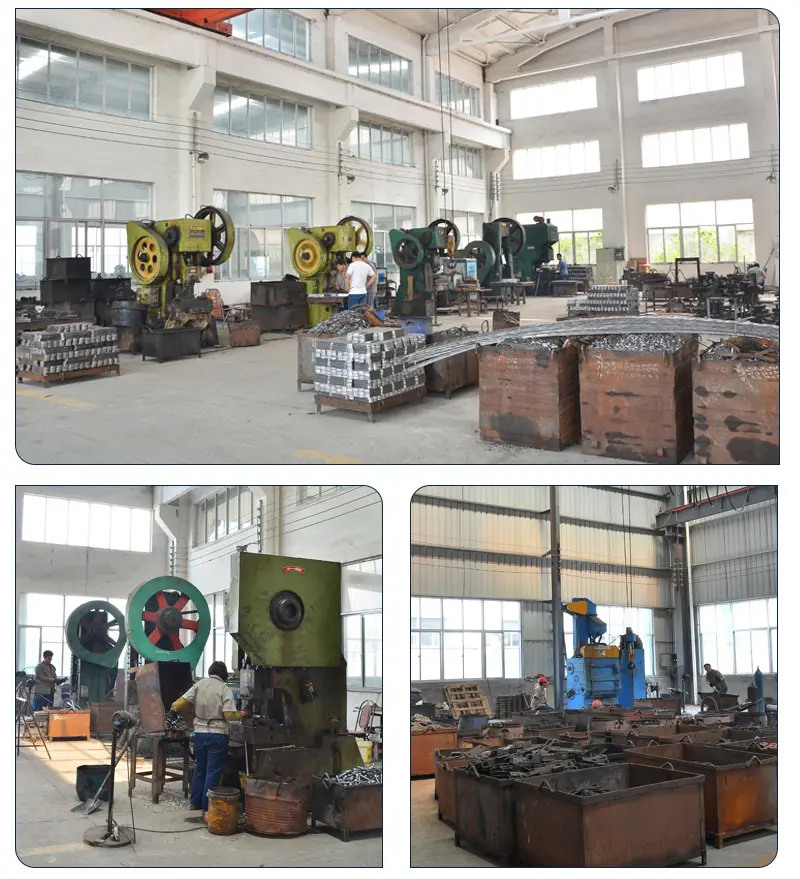
Workshop
Application
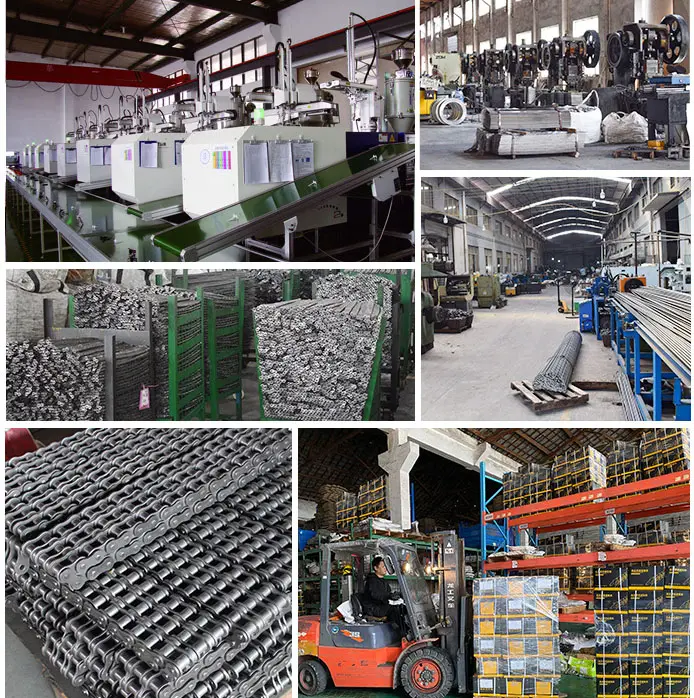
Packaging Details
Shipping
FAQ
1. Are you a manufacturer or trade Company?
We are a factory founded in 1997 with a trade team for international service.
2. What terms of payment do you usually use?
T/T 30% deposit and 70% against document, Western Union, L/C at sight
3. What is your lead time for your goods?
Normally 35 days after confirmed order. 30 days could be available in the low season for some items (during May to July), and 45 days during the new year and hot season ( Jan to March).
4. Samples
For customers who need sample confirmation before ordering, please bear in mind that the following policy will be adopted:
1) All samples are free of charge with a maximum value not exceeding USD 100.
2) The courier cost for the first-time sample sending will be charged by the consignee. We will send the samples with freight to be collected. So please inform your account with FedEx, UPS, DHL, or TNT so that we can proceed promptly.
3) The first-time courier cost will be totally deducted from the contract value of the trial cooperation.
4) OEM/ODM are both available.
| Uso: | Transmission Chain, Conveyor Chain, Dedicated Special Chain |
|---|---|
| Material: | Stainless steel |
| Tratamento de superfície: | Polimento |
| Recurso: | Resistente ao calor |
| Tamanho da corrente: | 1/2"*3/32" |
| Estrutura: | Corrente de rolos |
| Samples: | US$ 0/Foot 1 Foot(Min.Order) | |
|---|
| Customization: | Available | Customized Request |
|---|
Can roller chains be used for power transmission in automotive applications?
Yes, roller chains can be used for power transmission in automotive applications. However, it’s important to note that roller chains are not commonly used as the primary method of power transmission in modern automotive systems. The automotive industry has largely transitioned to other technologies such as timing belts and gears for power transmission. Nevertheless, roller chains can still be found in some automotive components and systems. Here’s a detailed answer to the question:
1. Engine Timing: Roller chains are commonly used in internal combustion engines to drive the camshafts and synchronize the opening and closing of the engine’s valves. The timing chain ensures precise timing between the crankshaft and camshaft, allowing for efficient engine operation.
2. Transfer Cases: In certain four-wheel-drive and all-wheel-drive vehicles, roller chains are used in the transfer case to transmit power from the transmission to the front and rear axles. The roller chain in this application allows for smooth and efficient power transfer between the different drivetrain components.
3. Other Applications: While roller chains are not as prevalent in other automotive systems, they can be found in some secondary applications such as power steering systems, engine oil pumps, and accessory drives.
It’s important to consider the specific requirements of the automotive application when determining the suitability of a roller chain. Factors such as load capacity, speed, temperature, and environmental conditions need to be carefully evaluated. Additionally, regular maintenance and lubrication are crucial to ensure the longevity and reliable performance of the roller chain in automotive applications.
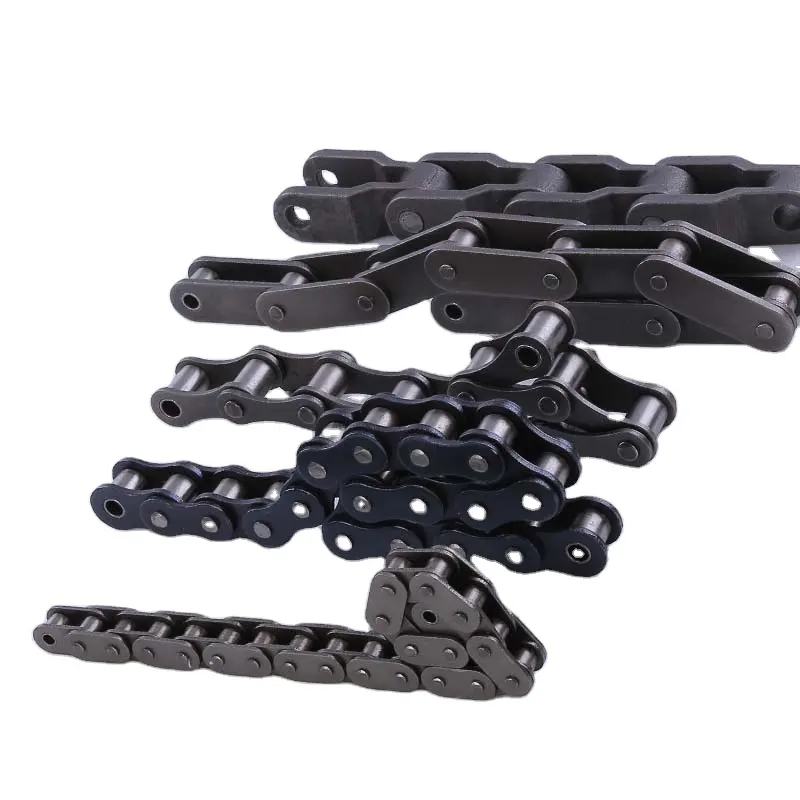
What are the differences between standard and specialty roller chains?
Standard roller chains refer to chains that are commonly used in a wide range of applications and are readily available from chain manufacturers. These chains typically have standard dimensions, including pitch, roller diameter, and pin diameter, and are made from materials such as carbon steel, stainless steel, or nickel-plated steel. Standard roller chains are suitable for most general-purpose applications that require moderate strength and durability.
Specialty roller chains, on the other hand, are designed for specific applications that require unique features or properties. These chains may have non-standard dimensions or be made from specialized materials such as high-strength alloys or plastic. Specialty roller chains can be used in a variety of industries, including food processing, automotive, and aerospace. Examples of specialty roller chains include corrosion-resistant chains, high-temperature chains, and chains with special attachments for conveying specific products or materials.
Overall, the main differences between standard and specialty roller chains are their intended applications and the unique features that they offer. Standard roller chains are suitable for most general-purpose applications, while specialty roller chains are tailored to specific applications that require special properties or features.
What are the different types of roller chains available?
Roller chains come in various types and configurations to suit different applications and requirements. Here’s a detailed answer to the question:
1. Standard Roller Chain: This is the most common type of roller chain and is widely used in general-purpose applications. It consists of inner and outer plates, rollers, and pins.
2. Double Pitch Roller Chain: Double pitch roller chains have twice the pitch length of standard roller chains. They are commonly used in applications where slower speeds and lighter loads are present, such as conveyor systems.
3. Heavy-Duty Roller Chain: Heavy-duty roller chains are designed to withstand higher loads and more demanding operating conditions. They feature thicker plates, larger rollers, and stronger pins, offering increased strength and durability.
4. Stainless Steel Roller Chain: Stainless steel roller chains are made from corrosion-resistant stainless steel material. They are suitable for applications where resistance to moisture, chemicals, and harsh environments is required, such as food processing, pharmaceutical, and marine industries.
5. Nickel-Plated Roller Chain: Nickel-plated roller chains have a layer of nickel plating on the outer plates, providing additional corrosion resistance. They are often used in applications where protection against rust and wear is essential.
6. O-Ring Roller Chain: O-ring roller chains have O-ring seals between the outer plates and rollers. The O-rings help retain lubrication and prevent contamination, resulting in reduced maintenance requirements and extended chain life.
7. Lube-Free Roller Chain: Lube-free roller chains incorporate self-lubricating bushings or rollers that eliminate the need for external lubrication. They are suitable for applications where maintenance-free operation and clean environments are required.
8. Attachment Roller Chain: Attachment roller chains have special attachments on the outer plates, allowing for the attachment of various accessories or components. They are commonly used in applications such as conveying, lifting, or indexing systems.
9. Silent Chain: Silent chains, also known as inverted tooth chains, have tooth-shaped links that engage with the sprockets. They offer smooth and quiet operation and are often used in applications where noise reduction is critical, such as timing drives.
10. Leaf Chain: Leaf chains consist of interlocking links with large flat plates connected by pins. They are commonly used in applications requiring high strength and durability, such as forklifts and lifting devices.
Each type of roller chain has its own unique features and advantages. The selection of the appropriate type depends on factors such as load capacity, speed, environment, and specific application requirements.


editor by CX 2023-08-14