
Produktbeskrivning
| Chain No | Pitch | Width Between Inner Plates | Pin Dia | Pin Length | Inner Plate Depth | Average Tensile Strength | Vikt |
| Mm | mm | mm | mm | mm | mm | Kn | kg/m² |
| 04B-1 | 6.000 | 2.80 | 1.85 | 6.80 | 5.00 | 3.2 | 0.11 |
| 05B-1 | 8.000 | 3.00 | 2.31 | 8.20 | 7.10 | 5.9 | 0.20 |
| *06B-1 | 9.525 | 5.72 | 3.28 | 13.15 | 8.20 | 10.4 | 0.41 |
| 08B-1 | 12.700 | 7.75 | 4.45 | 16.70 | 11.80 | 19.40 | 0.69 |
| 10B-1 | 15.875 | 9.65 | 5.09 | 19.50 | 14.70 | 27.50 | 0.93 |
| 12B-1 | 19.050 | 11.68 | 5.72 | 22.50 | 16.00 | 32.20 | 1.15 |
| 16B-1 | 25.400 | 17.02 | 8.28 | 36.10 | 21.00 | 72.80 | 2.71 |
| 20B-1 | 31.750 | 19.56 | 10.19 | 41.30 | 26.40 | 106.7 | 3.70 |
| 24B-1 | 38.100 | 25.40 | 14.63 | 53.40 | 33.20 | 178.0 | 7.10 |
| 28B-1 | 44.450 | 30.99 | 15.90 | 65.10 | 36.70 | 222.0 | 8.50 |
| 32B-1 | 50.800 | 30.99 | 17.81 | 66.00 | 42.00 | 277.5 | 10.25 |
| 40B-1 | 63.50 | 38.10 | 22.89 | 82.20 | 52.96 | 394.0 | 16.35 |
| 48B-1 | 76.20 | 45.72 | 29.24 | 99.10 | 63.80 | 621.6 | 25.00 |
| 56B-1 | 88.90 | 53.34 | 34.32 | 114.60 | 77.80 | 940.0 | 35.78 |
Our company offers variety of products which can meet your multifarious demands. We adhere to the management principles of “quality first, customer first and credit-based” since the establishment of the company and always do our best to satisfy potential needs of our customers. Our company is sincerely willing to cooperate with enterprises from all over the world in order to realize a CHINAMFG situation since the trend of economic globalization has developed with anirresistible force.
| Standard or Nonstandard: | Standard |
|---|---|
| Application: | Food Machinery |
| Strukturera: | Rullkedja |
| Material: | Stainless Steel |
| Type: | Double Pitch Chain |
| Function: | Transmisssion |
| Customization: | Available | Customized Request |
|---|
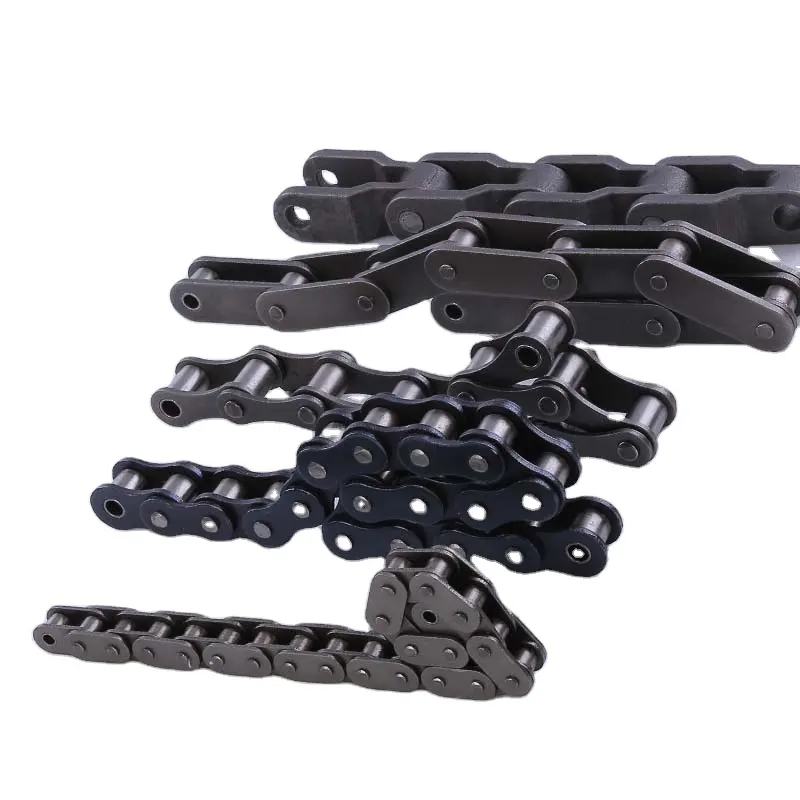
How do roller chains handle high torque loads?
Roller chains are designed to handle high torque loads effectively. Here’s a detailed answer to the question:
1. Robust Construction: Roller chains are constructed using high-quality materials and precise manufacturing techniques to ensure strength and durability. They are designed to withstand the forces generated by high torque loads without deformation or failure.
2. Load Distribution: Roller chains distribute the high torque load evenly across their links and pins. This even distribution helps prevent concentrated stress points and ensures that each link carries a portion of the load, reducing the risk of chain failure.
3. Fatigue Resistance: Roller chains are designed to resist fatigue caused by repeated stress cycles. They have sufficient strength and resilience to endure the high torque loads encountered during operation without experiencing premature wear or failure.
4. Proper Lubrication: Adequate lubrication is crucial for the smooth operation and longevity of roller chains under high torque loads. Lubrication reduces friction, minimizes wear, and helps dissipate heat generated by the increased forces. Proper lubrication ensures that the chain operates efficiently and extends its lifespan.
5. Tensile Strength: Roller chains are engineered to have high tensile strength, which allows them to withstand the tension created by high torque loads. The tensile strength of the chain ensures that it can handle the pulling force exerted by the rotating sprockets without elongation or failure.
6. Sprocket Selection: The choice of sprockets also plays a significant role in handling high torque loads. Sprockets should be matched appropriately with the roller chain to ensure proper engagement and efficient power transmission. Selecting sprockets with the appropriate tooth profile, material, and design helps optimize the performance and longevity of the chain under high torque conditions.
Roller chains have been extensively used in applications that require the transmission of high torque, such as heavy machinery, industrial equipment, and automotive systems. Their robust construction, load distribution capabilities, fatigue resistance, proper lubrication, high tensile strength, and compatibility with well-designed sprockets make them reliable and efficient in handling high torque loads.
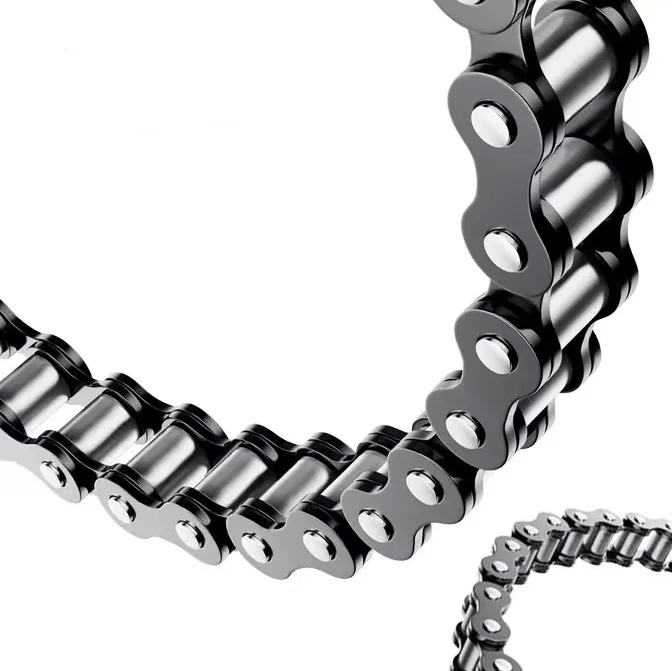
What are the advantages of using a roller chain over a timing belt?
Roller chains and timing belts are both commonly used for power transmission in various applications. Here’s a detailed answer to the question:
Advantages of using a roller chain:
1. Higher Load Capacity: Roller chains are capable of handling higher loads compared to timing belts. They are designed to transmit power in heavy-duty applications where high torque and shock loads are present.
2. Flexibility in Power Transmission: Roller chains are more versatile in terms of power transmission. They can transmit power over longer distances and are suitable for applications that require multiple shafts and complex power transmission routes.
3. Tolerance to Misalignment: Roller chains can tolerate more misalignment between the driving and driven sprockets compared to timing belts. They can accommodate slight angular misalignments and axial movements, making them suitable for applications where alignment precision is challenging.
4. Resistance to Harsh Environments: Roller chains are generally more resistant to contaminants, such as dirt, dust, and debris, compared to timing belts. They are commonly used in applications where exposure to harsh environments, such as high temperatures, chemicals, or abrasive particles, is expected.
5. Easy Maintenance and Replacement: Roller chains are relatively easy to maintain and replace. Regular lubrication, tension adjustment, and periodic inspection can help prolong their lifespan. In case of wear or damage, individual chain links can be replaced without the need for replacing the entire chain, making maintenance more cost-effective.
It’s important to note that the choice between a roller chain and a timing belt depends on various factors, including the specific application requirements, load conditions, speed, accuracy, and environmental considerations. Consulting with experts and considering the specific needs of the application can help determine the most suitable power transmission solution.
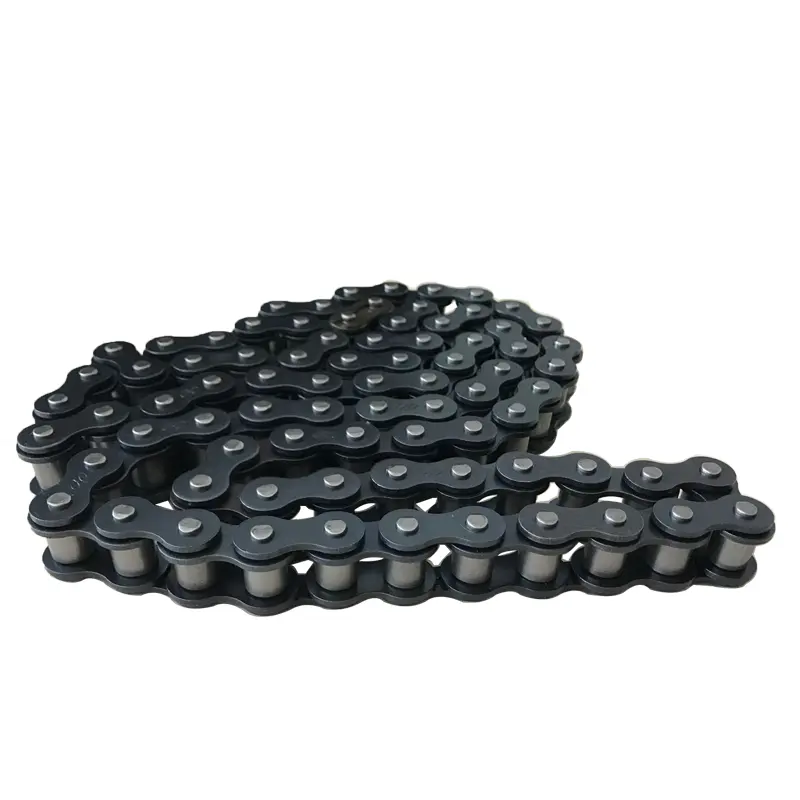
Hur står sig rullkedjor i jämförelse med remdrifter när det gäller effektivitet?
Rullkedjor och remdrifter är båda allmänt använda kraftöverföringssystem, men de skiljer sig åt vad gäller effektivitet. Här är ett detaljerat svar på frågan:
1. Mekanisk effektivitet: Rullkedjor har generellt sett högre mekanisk effektivitet jämfört med remdrift. Ingreppet mellan kedjan och kedjehjulen ger en positiv drivning med minimal slirning, vilket resulterar i effektiv kraftöverföring. Remdrifter kan å andra sidan uppleva viss slirning, särskilt i applikationer med högt vridmoment eller tung belastning, vilket leder till lägre effektivitet.
2. Storlek och längd: Rullkedjor är vanligtvis mer kompakta och har en kortare stigningslängd jämfört med remdrifter. Detta möjliggör en mer kompakt maskindesign och tätare axelavstånd, vilket minskar kraftöverföringssystemets totala storlek och vikt.
3. Lastkapacitet: Rullkedjor är kända för sin höga lastbärande kapacitet, vilket gör dem lämpliga för tunga tillämpningar. De kan hantera höga belastningar och överföra betydande mängder kraft utan att kompromissa med prestandan. Remdrifter har lägre lastbärande kapacitet och används oftare i lättare tillämpningar.
4. Hastighet och vridmoment: Rullkedjor är lämpliga för både höghastighets- och högvridmomentapplikationer. De kan arbeta med höga rotationshastigheter samtidigt som de överför betydande vridmoment. Remdrifter kan å andra sidan ha begränsningar vad gäller hastighet och vridmomentkapacitet, särskilt i krävande applikationer.
5. Underhåll och hållbarhet: Rullkedjor kräver regelbunden smörjning och underhåll för att säkerställa optimal prestanda och livslängd. Remdrifter, å andra sidan, anses generellt vara underhållsfria. Men om en remdrift blir feljusterad eller utsätts för kraftigt slitage kan den behöva bytas ut helt. Rullkedjor, med korrekt underhåll, kan vara mer hållbara och ha längre livslängd.
Det är viktigt att notera att valet mellan rullkedjor och remdrifter beror på olika faktorer, inklusive specifika tillämpningskrav, belastningsförhållanden, hastighetskrav och utrymmesbegränsningar. Varje system har sina fördelar och överväganden, och valet av det lämpligaste alternativet bör baseras på en noggrann utvärdering av dessa faktorer.


editor by CX 2023-10-23